

From Ukraine to Common Defence: a unique opportunity for Europe
By Claudia Devda | 26th of April, 2026 | 4 min
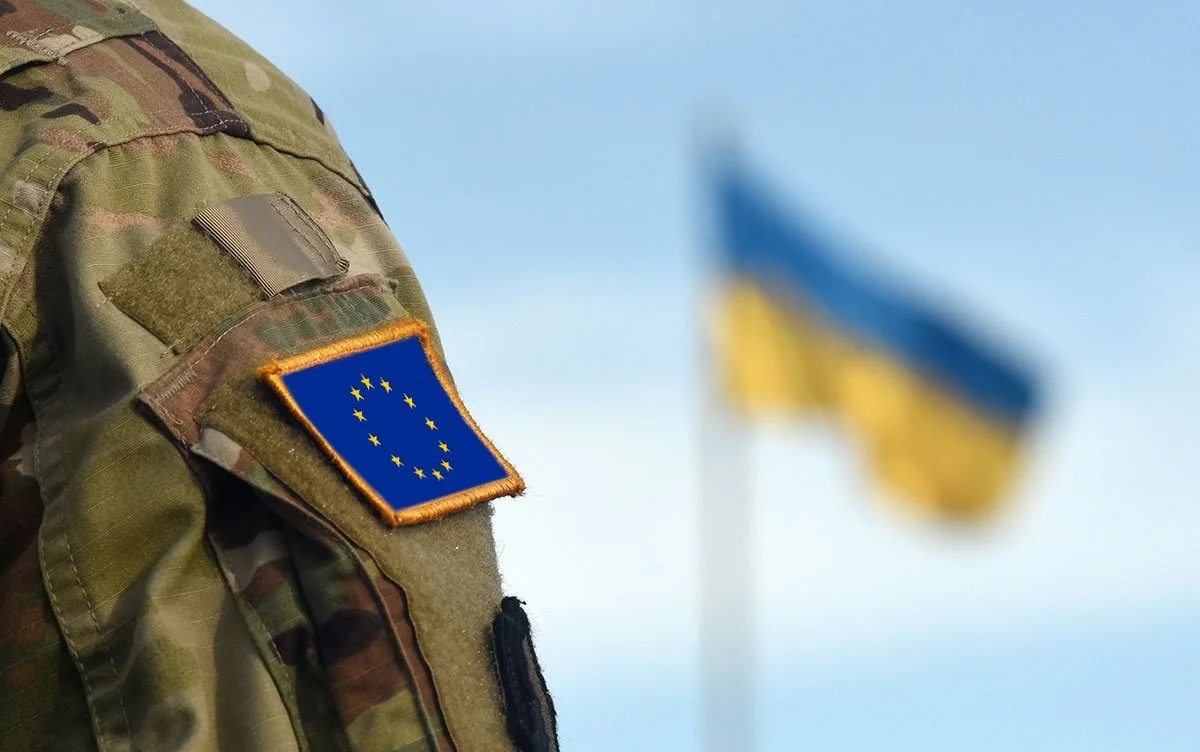
What else needs to happen before Europe realises that the war in Ukraine is not an external crisis, but a test of its own strategic survival?
The first, almost stark, finding emerges clearly from the IAI’s research: the war has shown that the European defence industrial and technological base was ill-equipped to sustain a prolonged, high-intensity conflict on its own continent. In 2024, two years after the start of Russian full-scale invasion of Ukraine, Michele Nones observes that European stockpiles proved insufficient, particularly in the land domain, and that Ukraine’s massive use of artillery placed European and transatlantic production capacities under severe strain. While the EU’s response, though significant, has focused on the supply side (with initiatives such as EDIRPA, ASAP, EPF reimbursements and joint ammunition purchases), Nones warns that these measures have not resolved the underlying problem, namely European fragmentation on the demand side, as well as a general lack of strategic and industrial coordination among Member States.
At the same time, the ongoing conflict brings to light a second truth: Ukraine is no longer merely a country in need of aid, but has become the place where, under extreme conditions, a new concept of defence is taking shape. Over more than four years of war, Kyiv has developed an ecosystem of military enterprises, where agility and decentralisation go hand in hand with innovation and an incremental approach. The case of Fire Point is emblematic in this regard: thanks to a deregulated system and extremely rapid development and production cycles, facilitated by a necessary reduction in bureaucracy, the company produces drones and long-range missiles at costs drastically lower than traditional systems (about €42,000 per FP-1 drone, a third of the cost of Russian Shahed drones), adapting them, moreover, on the basis of real-time operational feedback from military in the field.
Born out of necessity and having developed amid the tragedy of war, Ukraine’s defence industry has become a source of competitive advantage for the country, one that has rightly attracted attention not only in Europe but also globally. Yet, although the opportunities for learning and innovation for the EU are evident, recent developments confirm that a transformation in defence terms is still proceeding with uncertainty and on a fragmented basis. Bilateral cooperation agreements between Ukraine and Member States are multiplying, particularly in the key sector of drones, which today represent the heart of military innovation. Examples of this include the Drone Deal, discussed between Italy and Ukraine in April 2026 with the explicit aim of exchanging expertise and industrial capabilities, as well as the ten agreements signed between Kyiv and Berlin for the development of weapon systems and drone production through joint ventures, which have already produced around 10,000 units.
The accumulation of expertise and the harsh reality of battlefield-driven innovation are no longer a concern solely for Europe. In recent months, the United States and several Gulf states — including the United Arab Emirates, Qatar, Bahrain and Kuwait — have asked Kyiv for assistance against Iranian-made Shahed drones, precisely because Ukraine has developed an effective, cost-efficient and combat-proven countermeasure system, demonstrated by a 97% interception rate against massive Russian drone attacks.
The paradox here is clear: while Europe struggles to integrate these capabilities through a genuine common European architecture, other international actors are moving swiftly to acquire them. Since the experience in Ukraine shows that sustained and planned industrial and technological cooperation may prove essential for genuine European strategic autonomy, remaining in a middle ground is no longer viable. In a context where American pressure, persistent Russian aggression, competition with China and crisis of multilateralism coexist, greater responsibility on the part of Member States and real military integration appear to be the only way to ensure that the EU is no longer remembered merely as an “economic giant but a geopolitical dwarf”. In this sense, the war in Ukraine offers the Union a historic opportunity that concerns not only security, but its long-term strategic autonomy and its political nature: integrating defence means completing Europe where it has always remained incomplete and dependent, and finally asserting itself as a true geopolitical actor.
Claudia Devda is a 3rd-year Economia Aziendale e Management student.
