

The Iran & USA-Israel War Explained - A Look At The Timeline
By Ines Bellumore | 25th of March, 2026 | 4 min
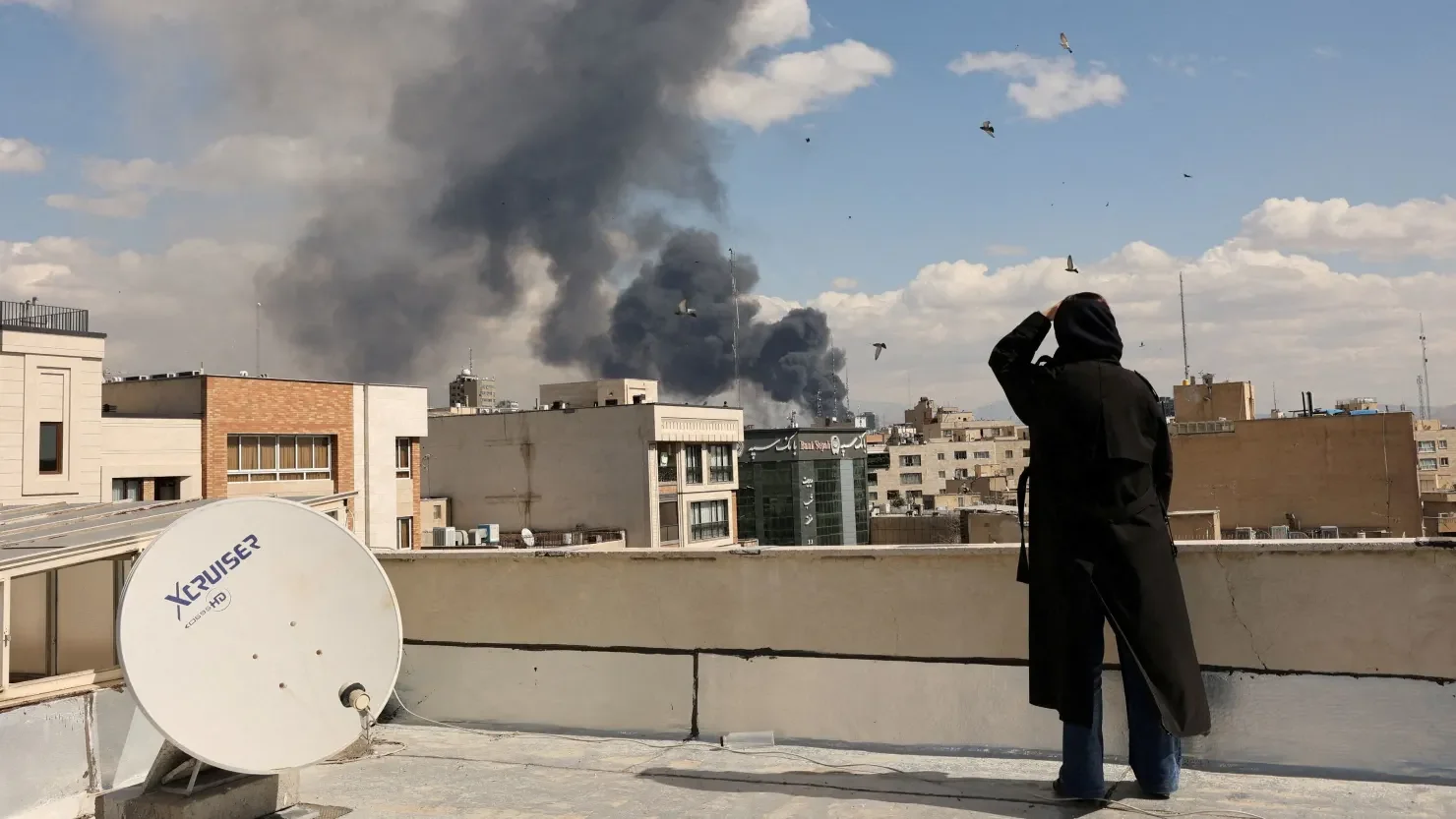
Smoke rises following an explosion, after Israel and the U.S. launched strikes on Iran, in Tehran, Iran, March 1, 2026
This article does not aim to take a side in the conflict or express an opinion. Its sole purpose is to provide a clear and factual overview of recent events as well as analyse the legality of the conflict and its possible consequences on transatlantic relations.
The month of February initially opened with cautious optimism, as the United States and Iran engaged in discussions regarding a possible agreement on Iran’s nuclear programme. However, these diplomatic efforts quickly deteriorated.
On February 6th, indirect talks between Iran and the United States concluded with a broad commitment to continue pursuing a diplomatic path. Iran’s Foreign Minister had been instructed by the Iranian President to engage in what were described as “fair and equitable negotiations.”
Tensions rose shortly thereafter. Iranian officials began to suspect that Israeli Prime Minister Benjamin Netanyahu was attempting to derail negotiations, particularly following his February 11th meeting at the White House.
Netanyahu has long advocated for a more aggressive stance toward Iran, including the possibility of regime change. This position appeared to gain support from U.S. President Donald Trump, who, in a February 13th interview, publicly endorsed the idea.
On February 21st, President Trump ordered a significant military build-up in the Middle East, including the deployment of naval strike groups and strategic air assets. This move intensified fears of an imminent conflict.
Diplomatic talks formally collapsed on February 26th, with no agreement reached on Iran’s nuclear programme.
Two days later, on February 28th, the United States and Israel launched a coordinated military strike on multiple Iranian targets, reportedly focusing on nuclear and military infrastructure. The strikes caused significant material damage to nuclear facilities and military installations, along with civilian and military casualties, though exact figures remain disputed.
Iran responded within hours, launching missile and drone strikes against Israeli targets, as well as against U.S. military installations in the region.
In the immediate aftermath, Prime Minister Netanyahu justified Israel’s actions by citing the need to eliminate what he described as an “existential threat” posed by Iran. President Trump, for his part, called for the surrender of the Iranian regime and openly encouraged internal dissent.
This escalation must be understood within a broader historical context: the United States and the Islamic Republic of Iran have experienced nearly five decades of sustained hostility, dating back to 1979.
Following the initial strikes, European powers, including the United Kingdom, France, and Germany, called for de-escalation and a return to diplomatic negotiations.
On March 1st, Iran’s Ambassador to the United Nations, Amir Saeid Iravani, condemned the strikes as a violation of international law and characterised them as acts of aggression. Iran invoked its right to self-defence under international law. Australia echoed these concerns, describing the attacks as illegal and declining to offer military support.
The conflict escalated further on March 2nd, when Israel launched strikes in Lebanon following missile fire attributed to Hezbollah. In response, Iran expanded its retaliation, conducting strikes, directly or via allied groups, across the region, targeting Israel, Jordan, Kuwait, Bahrain, the UAE, Qatar, Saudi Arabia, Oman, and Cyprus.
The United Kingdom allowed the United States to use its military bases, but strictly limited this authorisation to “specific and defensive purposes,” according to Prime Minister Keir Starmer, who also expressed legal and strategic concerns about the intervention.
Spain, by contrast, refused access to its bases. This decision was followed by a public “No to War” address by Prime Minister Pedro Sánchez on March 4th, which drew sharp criticism from President Trump, including threats of economic retaliation.
French President Emmanuel Macron reaffirmed France’s commitment to European security, particularly in relation to Cyprus, while European Commission President Ursula Von Der Leyen emphasised the EU’s commitment to a rules-based international order, while acknowledging growing challenges to its effectiveness.
Since the beginning of the conflict, several senior Iranian officials have reportedly been killed in targeted strikes, including high-ranking military leaders. Reports regarding the death of Supreme Leader Ali Khamenei remain unconfirmed and highly contested, contributing to significant uncertainty and instability within Iran.
Ines Bellumore is a 2nd-year Global Law student.
