

Leonardo’s future amid political tensions
By Maria Giovanna Norgi and Giovanni Pazzuconi | 5th of May, 2026 | 5 min
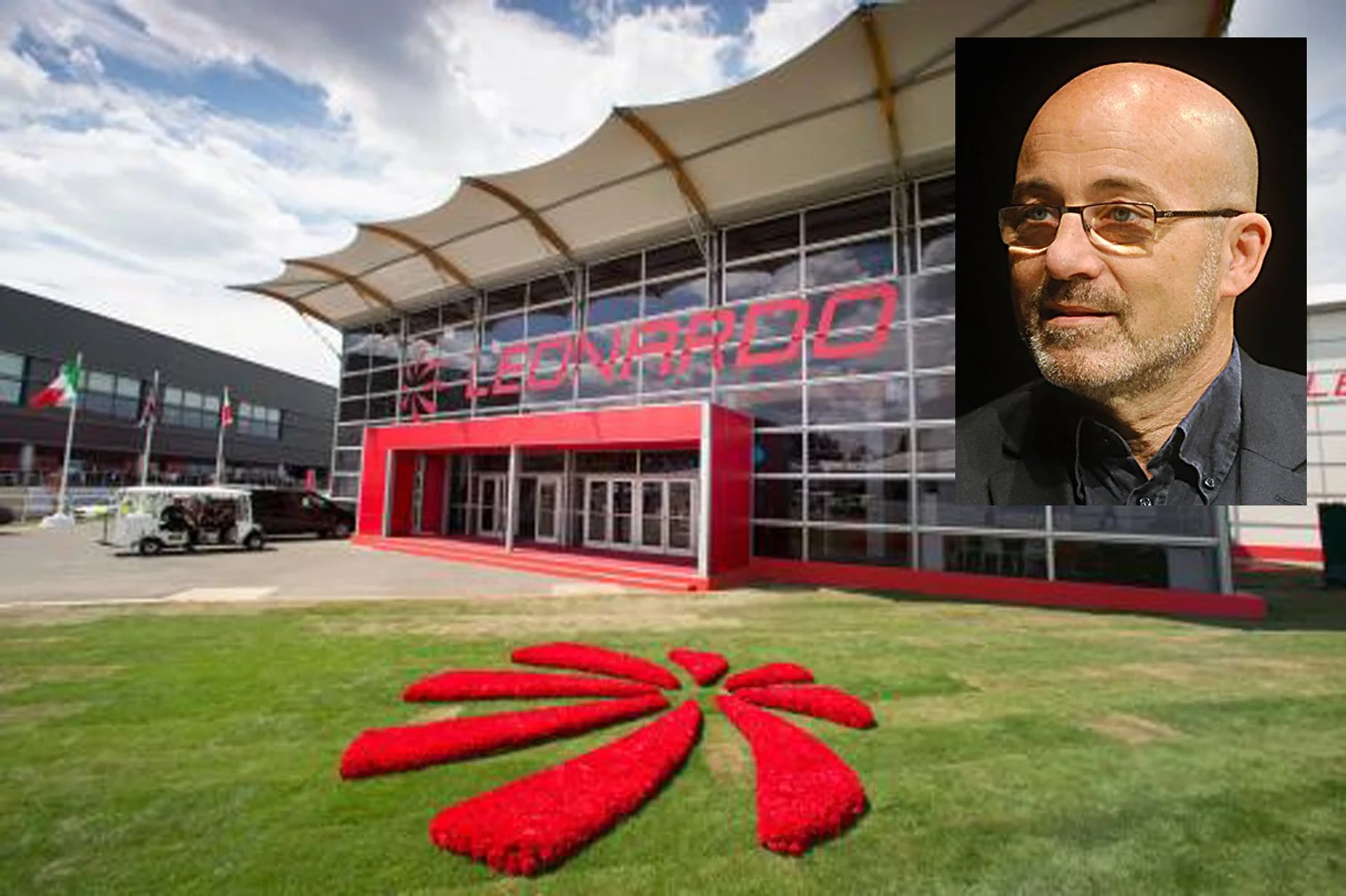
Roberto Cingolani, as newly appointed Leonardo’s CEO in April 2023.
Leonardo’s future took an unexpected turn on 9 April 2026. The former CEO of the state-backed aerospace and defence contractor, Roberto Cingolani, has had his contract terminated. The decision has sparked uncertainty and doubts among investors who were considering the renewal of the CEO as a sign of integrity and continuity after Leonardo’s positive trend. As a consequence, the share price dropped in early trading on 10 April, reaching a -4,87% loss just a few hours after the announcement.
“Was this change in the chain of command really necessary?” This is the question that most of Leonardo’s investors are posing to the Italian government. Indeed, Leonardo has been one of the best performing firms in recent years, reaching record earnings exactly under the presidency of Cingolani. In particular, Leonardo’s share price has more than quadrupled under Cingolani's watch, as reported by Reuters. According to Bloomberg, “Cingolani has personally created over €25 billion ($29 billion) in value for the shareholders,” said Marco Elser, a partner at Lonsin Capital in Rome.
Now the question for national and international shareholders and stakeholders is whether the next appointed CEO, Lorenzo Mariani, as communicated by the Italian Treasury, will be able to navigate Leonardo in safe waters as Cingolani did. Mariani currently serves as managing director for Italy at missile maker MBDA, which is part of Leonardo, but he has worked directly for the defence contractor in various roles.
Different opinions have been shared in this regard. Some journals, such as Il Post, argue that the Italian government has become worried that the increasingly communitarian approach adopted towards the EU would backfire on relations with the US, a long-standing ally of the current prime minister, Giorgia Meloni. Others propose an alternative explanation, involving the strategic allocation of resources planned by Cingolani; DefenceNews reports that the former CEO was focused on a non-kinetic portfolio, a second-order option in the current political agenda that prioritises, instead, hard-power capabilities.
In contrast, the head of the think tank IAI defence program, Alessandro Marrone, backed the new appointment, stating that “Mariani is a safe choice, a top manager who has been at Leonardo before, knows the industry and military interlocutors”.
What poses the biggest challenge is not the change in the Leonardo CEO per se, but the change in direction of the Leonardo enterprise that the new CEO will dictate. Each leadership endorses different values and strategic visions, prioritises different interests, and shapes the company's trajectory in ways that extend far beyond the boardroom. Ultimately, this is what the loss in Leonardo S.p.A.'s market value can be attributed to: investors have yet to observe how the Mariani era will unfold, as reflected in the conflicting opinions abovementioned.
Another issue is the political character of this change in leadership. As the largest shareholder of Leonardo S.p.A. (30.2%), the Italian government is in a position to exert substantial influence on the decision to oust Cingolani. In this regard, the media have consistently reported on tensions between Cingolani and the Italian Defence Minister Guido Crosetto, who first proposed Mariani as CEO back in 2023. Note, however, that this is not an isolated case. In 2017, the Italian Treasury proposed veteran banker Alessandro Profumo to replace CEO Mauro Moretti, and the Board eventually complied.
The extent of the Italian government intervention exceeds political appointments of leadership. Most essentially, Rome is able to guide and redirect the strategic direction pursued by the enterprise. Last March, Cingolani presented the 2026-2030 Industrial Plan, whose core ambition was to reposition Leonardo as the preeminent high-technology player in global security – anchored in AI, cybersecurity, high-performance computing, and the flagship Michelangelo Dome, a multi-domain defence architecture projected to unlock €21 billion in new business opportunities over the next decade.
This plan, however, lacked the support of the most fundamental shareholder of the company, and it marked the end of Cingolani's term.
In a geopolitical context where defence and rearmament have become increasingly salient, these influences hold exponential importance. One of the primary concerns regards Leonardo's role in European defence consolidation. While Cingolani endorsed a vision of deep integration within the European defence ecosystem, prioritising interoperability, joint ventures and a technology-first approach aligned with EU strategic autonomy, we can only speculate what the new leadership will prefer. It is worth noting that France, Germany and the UK all maintain strong government influence over their national defence champions without this being uniformly seen as a barrier to European cooperation. What distinguishes the Italian case, however, is the abruptness of the intervention and the extent to which it ran against the visible preferences of both markets and management.
Two trade-offs emerge. First, it is “us vs. them”. The uncertainty created by the leadership change represents a signal of Leonardo being a difficult partner for consolidation, especially within a project of a unified European defence system. Furthermore, with the Trump administration pressuring European allies to purchase American defence equipment while the EU simultaneously builds its own industrial base through ReArm Europe, Leonardo sits at a genuine geopolitical fault line — and the replacement of Cingolani signals which direction Rome intends to lean.
Secondly, it is about “them”. Italy must balance its alliances to build a solid defence architecture, which will help both respond effectively to crises and pursue long-horizon stability. Unwisely, the US and the EU seem to be on rival sides and pursuing different interests.
It is in this moment, where defence spending is surging, geopolitical equilibria are being redefined, and Leonardo's order book was already growing at a record pace under Cingolani, that the government decided to intervene, precisely when the company needed stability most. The real test of the Mariani era will not simply be whether Leonardo can sustain its financial momentum, but whether it can maintain its position as a credible consolidator in European defence.
Maria Giovanna Norgia is a 1st-year Politics and Policy Analysis student.
Giovanni Pazzuconi is a 1st-year Economic and Social Sciences student.
