

Negotiating an Uncertain Peace – How the EU Fits Into the Latest Push For Stability
By Flavia Lo Giudice | 13th of December, 2025 | 4 min
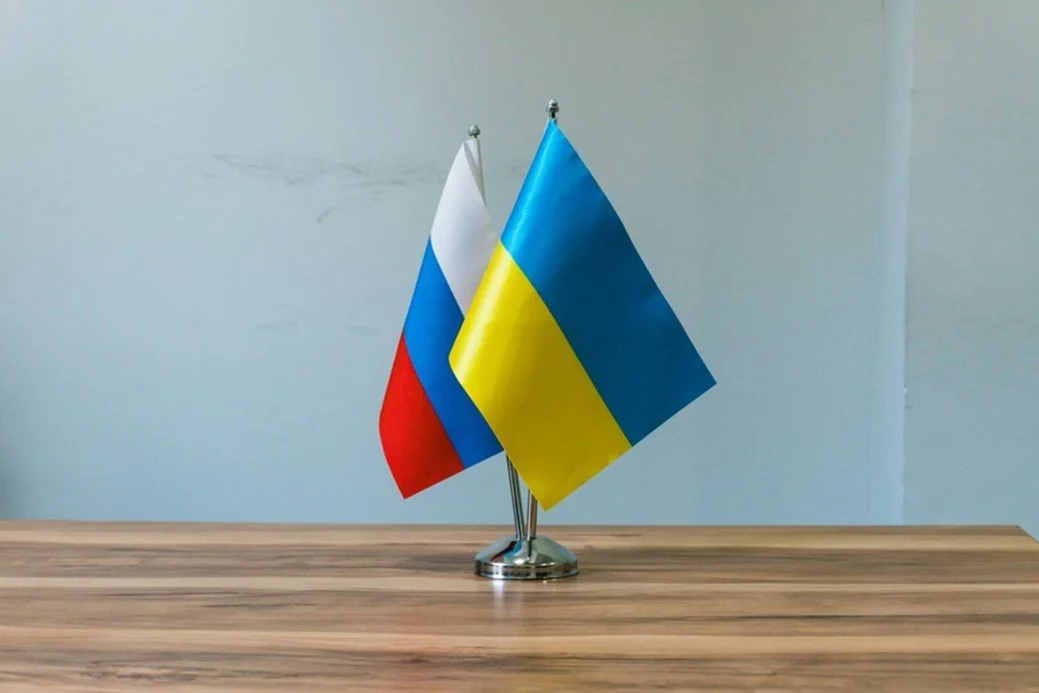
In recent weeks, discussions concerning a possible framework to suspend the Russia–Ukraine war intensified, driven not by a breakthrough on the battlefield but by mounting political and economic pressures on both sides. Among the proposals circulating, a controversial 28-point plan has sparked debate in Kyiv and EU capitals. Critics argue that parts of the draft risk functioning less as a balanced peace effort and more as an imposed settlement that could limit Ukraine’s sovereignty and reward Russian gains.
In this context, the European Union is confronted with a strategic dilemma: how to influence negotiations in a way that supports Ukraine’s core interests, preserves European security principles, and avoids accepting a framework that appears to prioritize great-power bargaining over a stable, legitimate settlement?
This renewed diplomatic effort does not arise from sudden optimism, it emerges, instead, from a shared recognition that the war has reached a phase where further costs far outweigh potential gains. Domestic pressures play an important role as well. Ukraine remains committed to resisting Russia’s invasion, yet it must sustain its economy, mobilize new personnel, and manage civilian life under increasingly difficult conditions, all while relying heavily on Western assistance. Russia, for its part, faces long-term economic stagnation aggravated by sanctions, logistical burdens in sustaining the war effort, and the political challenge of managing a conflict that has lasted far longer than the Kremlin initially expected. These pressures have not yet forced either side into concessions, but they do create incentives to explore diplomatic mechanisms that might stabilize the conflict.
Initially, discussions have centered on a U.S.-promoted 28-points peace framework, which included provisions that would have required Ukraine to cede territory and accept limits on its military and alliance prospects. That draft has been met with resistance from Kyiv and many European leaders, who view such concessions as incompatible with the country’s sovereignty and long-term security. Ukrainian President Zelensky has repeatedly stated that Ukraine will not cede land to Russia, emphasizing that any settlement must respect legal and moral obligations to retain the country’s internationally recognized borders.
In response to these concerns, some European governments have been drafting their own counter-proposals, which aim to keep Ukraine’s core demands at the center of negotiations, while also addressing Russian security concerns enough to sustain dialogue. European proposals reportedly adjust or remove the most contentious elements of the U.S. draft, emphasizing Ukraine’s sovereignty and robust security guarantees rather than fixed territorial concessions. In the meantime, battlefield dynamics continue to influence talks, with Ukraine recording tactical advances near Kupiansk even amid ongoing drone and artillery attacks.
The European Union has also taken a significant step by indefinitely freezing around €210 billion in Russian assets, creating a financial basis for long-term support to Ukraine. The move has triggered legal challenges from Russia but signals Europe’s commitment to Ukraine’s economic survival and reconstruction. Even though it is not a direct party to the talks between Kyiv and Moscow, the EU neverthless holds substantial influence since Europe is Ukraine’s principal economic partner and the main source of long-term reconstruction funding. European leaders have stressed that any durable settlement must account for the security realities in Europe and cannot be crafted without significant European input. Pope Leo XIV perfectly underscored this point, arguing that excluding European partners from designing a peace plan “is unrealistic” given that the war is happening precisely on the European continent itself.
U.S. President Trump, from his part, has publicly expressed frustration with the slow pace of negotiations, hoping that a deal could be already reached by Christmas, which seems quite overoptimistic at the moment. The Kremlin, in turn, has reaffirmed the maximalist positions it has held throughout the conflict, insisting on recognition of Russian territorial gains as a basis for any meaningful ceasefire. These pressures create a contradictory diplomatic tension, a grey area where urgency and caution coexist in a delicate but temporary balance.
In practical terms, this means that the current negotiation process, influenced by U.S. initiatives, European revisions, and Ukrainian insistence on core principles, offers several possible outcomes. A workable ceasefire that limits violence and creates space for further talks seems the most immediate objective. A broader, more permanent settlement that resolves territorial disputes and security architecture, however, remains distant.
In this uncertain landscape, the EU’s role is needed more than ever. Europe is not merely a bystander but a primary guarantor of Ukraine’s economic survival and post-conflict reconstruction. Its financial commitments, political support, and insistence on fundamental principles such as sovereignty and territorial integrity shape the environment in which negotiations unfold. While Europe cannot unilaterally determine the terms of a peace agreement, it can ensure that any settlement aligns with the continent’s long-term stability and legal norms. Once again, Europe is presented with the opportunity to elaborate a strategic and joint plan to address relevant conflicts in the continent and demonstrate global presence and relevance. Would it be able to stand united in its future responses, or will it seal its fate by falling in enduring geopolitical inertia?
Flavia Lo Giudice is a second year Bachelor student at Università Bocconi, studying International Economics and Management
