

The West’s Moral Reckoning
By Antonio Marrone | 6th of December, 2025 | 9 min
Following direction from the Editorial Board, this article is published as submitted. The overseeing editor declines any responsibility for the positions or claims expressed, which do not reflect the editor’s assessment and are exclusively the author’s own.
This article was published on the 19/11/2025 on the website of the cultural association Giovani Reporter (https://www.giovanireporter.org/2025/11/19/il-prezzo-del-silenzio-analisi-geopolitica-gaza/).
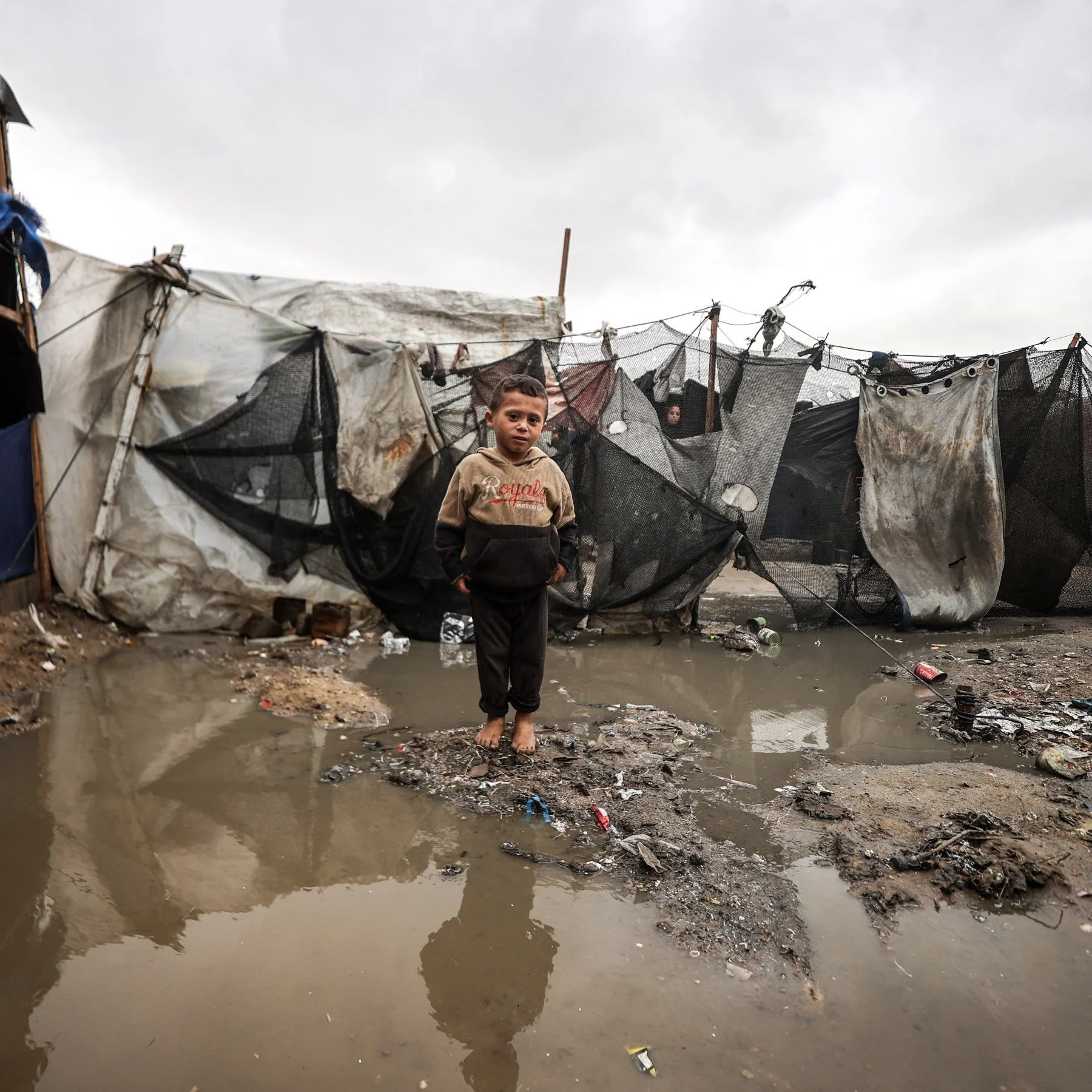
Over the past few months, cities across the world have been flooded with marches and demonstrations. These protests aim to maintain pressure on governments to take action to stop the ongoing genocide in Gaza, as they represent the only strategy available to public opinion. As we’ve seen in major European cities such as Rome and Paris, citizens have mobilized to expose the indifference and hypocrisy of Western governments.
Now, under the weight of growing public pressure, something is finally beginning to shift. As Jacobin recently noted, “Western governments are for the first time since the emergence of the Zionist movement during the late nineteenth century, taking measures in support of the Palestinians in response to popular pressure”. In recent months, many of Israel’s traditional allies — including France, Britain, Australia, and Canada — have taken steps toward recognizing a Palestinian state. The message is clear: Israel is becoming increasingly isolated over its war in Gaza.
Even the relationship with the most vital partner for Tel Aviv, the United States, has reached historic lows. As The Economist points out, “Democratic voters have long been drifting away from America’s most indulged ally. Republican voters are losing faith too”. And, as the same article notes, although shifts in public opinion “are slow to gather momentum, they are hard to reverse”.
The ties between the U.S. and Israel have long been characterized as a special relationship. As former United States President Joe Biden once stated in 1986, “Were there not an Israel, the United States would have to invent an Israel”. Israel indeed represents a fundamental pillar for U.S. influence in an unstable region such as the Middle East. And “ever since the mid 1960s, Israel received support even when it took actions American leaders thought were unwise and contrary to US interests” (Mearsheimer, The Israel Lobby and U.S. Foreign Policy). As data from the CRS (Congressional Research Service) show, Israel has been the largest cumulative recipient of foreign aid since its founding, receiving over $300 billion in total economic and military assistance. And, as the Council on Foreign Relations notes, “nearly all of U.S. aid today goes to support Israel’s military, the most advanced in the region”. Israel is indeed the strongest military power in the Middle East and, nevertheless, still today it continues to receive unusual aid for its status, as no Arab state would intentionally attack Israel. Many defenders of US foreign policy towards Israel justify it on the basis of essentially moral claims by making the argument that Israel is not only a fellow democracy, but also the only democracy in the Middle East, surrounded by autocratic and thus morally inferior Arab states. As when in May 2004, on the occasion of the annual policy conference of the American Israel Public Affairs Committee, former United States President George W. Bush “began his speech by applauding AIPAC’s efforts to strengthen the ties that bind our nations – our shared values, our strong commitment to freedom”. Mearsheimer, in the above-mentioned book The Israel Lobby and US foreign Policy, argues that the “shared democracy” rationale was undermined by multiple factors such as Israel’s “more than just discriminatory” treatment of its Arab citizens or “its continued imposition of a legal, administrative, military regime in the Occupied Territories” that denies Palestinians basic human rights”. Such rhetoric of shared values merely conceals the real motivations behind the special relationship.
On September 16th, 2025, the United Nations Human Rights Council concluded that Israeli authorities and military forces have committed, and continue to commit, acts constituting the actus reus of genocide against Palestinians in the Gaza Strip: according to Palestinian health authorities, their campaign against Hamas militants in the Gaza Strip has killed more than 67,000, with nearly a third of the dead under the age of 18 (Reuters). Nevertheless, Israel remains unpunished. While violations of international law by other states — such as Russia’s invasion of Ukraine in 2022 or the Apartheid regime in South Africa — were swiftly condemned and sanctioned by Western powers, the same urgency has never applied to Israel. The contrast is glaring: when the aggressor is a Western ally, the democratic principles the West pretends to spread around the world are forgotten and action becomes a cynical choice based on calculated interests.
There have been no effective sanctions imposed on Israel by Western countries because doing so would directly undermine their own political and economic interests. Israel is not merely an ally; it is a partner deeply embedded in strategic sectors of the global economy, particularly in the military, defense, and cybersecurity industries. As for Italy, as said by Alessandro Volpi, an Italian historian and politician, “these measures include the suspension of the 2000 Free Trade Agreement between the EU and Israel, but only for 37% of the total trade volume, since the remaining portion is still regulated by WTO rules. However, even for that 37% affected by the suspension, the only consequence will be the application of the EU’s standard tariffs to Israeli goods, meaning there will be no suspension of imports, not even those of weapons”.
According to ISTAT, although Italy’s military exports to Israel have been almost entirely suspended, imports from Israel doubled in 2024 compared to the previous year, reaching roughly €155 million through forty-two authorized transactions. Western economies are so interconnected with Israel that it has simply not been convenient for political elites to give visibility to the ongoing genocide. Silence does not represent neutrality, but a political choice made to protect economic interests.
This silence extends beyond governments to the corporate world, where ethical responsibility is routinely sacrificed to profit. Companies such as Leonardo have shown little concern for the ethical implications of signing agreements with Israel in the midst of an ongoing genocide. As an article from ICT Security Magazine declares, in 2023, Leonardo signed two strategic agreements with the Israeli Innovation Authority (IIA) and Ramot Tel Aviv University, focusing on cybersecurity, quantum technologies, and autonomous systems. Italy and Israel are indeed bound by a strategic partnership, with the latter being for Italy a partner hard to replace. Relations between Italy and Israel are so close that Roberto Baldoni, the former Director of National Cybersecurity, speaks of a “loss of digital sovereignty”. In a 2024 interview with Fortune Italia, he stated: “From the moment I take critical technology from another country, I am moving away from the ideal benchmark of digital sovereignty”.
As Wired points out, “Israeli startups are among those that have received some of the highest funding from the EIC Accelerator”. The EIC (European Innovation Council) Accelerator, launched in 2021 under Horizon Europe, supports startups and small and medium-sized enterprises across Europe. Horizon Europe is the EU’s flagship initiative for research and innovation, designed to stimulate economic growth, create jobs, and improve citizens’ lives (Il Sole 24 Ore). Furthermore, Wired notes that “so far, Israeli startups have received from the European Union, through the EIC Accelerator, more than double the funding of their Italian counterparts — specifically, €396 million compared to €177 million — and despite incidents such as that involving Xtend, they continue to receive funds. In early March 2025, among the selected startups was RepAir Dac, which will receive €13 million for its carbon extraction and storage project”.
In July 2025, the European Commission’s proposal to partially exclude Israel from the Horizon Europe program failed to gain the qualified majority needed for approval. Had the measure passed, Israel would have lost access to future grants and investments worth around €200 million from the European Innovation Council (EIC), which supports the development of advanced technologies. Countries such as the Netherlands, Ireland, France, Luxembourg, Slovenia, Portugal, Malta, and Spain expressed their support for the Commission’s initiative and, in some cases, called for even harsher sanctions, including of a commercial nature. However, Germany and Italy requested further examination before making a final decision. Approval of the suspension, in fact, also requires the favorable vote of one of these two countries, whose demographic weight is decisive in the European decision-making process (EuroNews). The rhetoric of European values dissolves in the face of the power of markets and strategic alliances, and fails doubly when nations like Italy become dependent on a country that contributes to the repression of another people.
At the same time, the field of cybersecurity represents one of the main pillars on which Israel’s systematic repression of Palestinians is built. Palestine has indeed become the testing ground for new military technologies. As a publication from the Arab Center Washington DC shows, before the start of the military operation against Gaza, the technology industries accounted for 20% of Israel’s GDP, compared to 14% in 2012. In 2012, their output was 50% higher than that of the trade sector, the country’s second largest industry; by 2022, the gap between the two sectors had exceeded 90%. Over the past decade, Israel’s high-tech exports have increased by 107%. In the first four months of 2025, the share of high-tech exports out of total Israeli exports continued to grow, reaching 57.2% of all Israeli exports – the highest rate recorded after the figure of 56.4% for the whole of 2024. (Israel Innovation Authority).
Francesca Albanese, the UN Special Rapporteur on the situation of human rights in the Palestinian territories occupied since 1967, published a report titled “From economy of Occupation to economy of genocide”, which highlights how “far too many corporate entities have profited from Israel’s economy of illegal occupation”. The report shows that, “as the main source of finance for Israel’s State budget, treasury bonds have played a critical role in funding the ongoing assault on Gaza. From 2022 to 2024, the Israeli military budget grew from 4.2 per cent to 8.3 per cent of GDP, driving the public budget into a 6.8 per cent deficit. Israel funded this ballooning budget by increasing its bond issuance, including $8 billion in March 2024 and $5 billion in February 2025, alongside issuances on its domestic shekel market. Some of the world’s largest banks, including BNP Paribas and Barclays, stepped in to boost market confidence by underwriting these international and domestic treasury bonds, allowing Israel to contain the interest rate premium, despite a credit downgrade”. According to the report, the Tel Aviv Stock Exchange surged 213% since October 2023, accumulating around US $225.7 billion in market gains, an outstanding rise that reflects how war represents a source of profit.
The West has shown its support for Israel through the media apparatus as well. Western powers have demonstrated their complicity by maintaining silence in the face of genocide. “Europe is with Israel and its people. Its lesson of liberty and progress won’t be extinguished by violence and barbarism” said the Vice President of the European Parliament Pina Picierno on 7 October. “The militants have written the darkest page in the Israel-Palestine conflict” stated Lucia Annunziata, a member of the European Parliament, in an article for La Stampa in November 2023. In another occasion, shortly after the attack, Carlo Calenda, a notorious Italian politician, leader of the Azione Party pronounced that “we (his party, Azione) stand with Israel and support its right to defend itself” in front of the Senate. This narrative proposed by prominent italian figures in the public discourse completely disregards the history of the conflict and erases decades of Israeli occupation, apartheid policies, and systematic violations of international law. A clear example is an article published by Il Foglio, one of the major Italian newspapers, that moves an attack directly to António Guterres, the Secretary General of the United Nations, which, attempted to contestualize the pogrom of 7 October shortly after it took place. The article stands with Israel by firmly declaring Gaza is ‘free’ since 2005. Over the years, the myth of a unilateral Israeli withdrawal from Gaza has stubbornly persisted – and has been repeatedly invoked as alleged evidence of Israel’s noble willingness to occasionally play by the rules. And yet objectively speaking, what happened in August of that year was not much of a withdrawal at all, given that the Israeli military continued to control Gaza’s borders while subjecting the territory to a punishing blockade and periodic wanton bombardment(Al Jazeera). The continuous manipulation of history by the West to justify the violence perpetrated by Israel has contributed to the realization of a genocide. As observed by Ilan Pappè in his book La prigione più grande del mondo (pag. 162), “following the evacuation of the settlers came Hamas’ rise to power. The immediate Israeli response was to impose an embargo on the Gaza Strip, to which Hamas retaliated by launching missiles on Sderot, the closest city to the Strip. This provided Israel with the pretext to resort to air power, artillery, and attack helicopters. According to Israeli statements, the fire was directed at the missile launch areas, but in practice this meant striking everywhere in the Strip”. It was in this context that Operation First Rain was launched, initiating one of the most brutal phases of the assault. The results were as follows: “On December 28, 2006, B’Tselem — the Israeli human rights organization — published its annual report on Israeli atrocities in the Occupied Territories. That year, Israeli forces had killed 660 civilians. Compared to the previous year (around 200), in 2006 the number of Palestinians killed by Israel had tripled. According to B’Tselem, that year the Israelis had killed 141 children. Most of the victims came from the Gaza Strip, where Israeli forces had demolished nearly 300 houses and wiped out entire families. This means that since 2000, Israeli forces had killed almost 4,000 Palestinians, many of them children; more than 20,000 others had been wounded”.
Israel, meanwhile, has been able to suppress internal dissent — including by killing journalists with total impunity — partly “because of the failure of many Western media organizations and journalists to stand up for their Palestinian colleagues,” as The Guardian notes. The numbers speak for themselves: “The Committee to Protect Journalists says that 192 journalists have been killed since 7 October — 184 of them Palestinians killed by Israel. Of the Palestinians killed, the CPJ found that at least 26 were deliberately targeted for their work as journalists, though the group could not determine whether they were killed specifically for their work”. The Hamas pogrom was swiftly exploited by Israel to turn the narrative to its advantage. Its response was not only military, but also an unprecedented media and propaganda offensive aimed at reframing aggression as self-defense and silencing any dissenting narrative. As brilliantly put by the European Institute of the Mediterranean, the reaction “represented an unprecedented case of disinformation, characterized by a massive surge in misleading content”. For example, shortly after the 7 October attack, “Israel launched an AI-powered application aimed directly at the public, entitled Words of Iron. This platform leveraged the efforts of volunteers and pro-Israel advocates worldwide to amplify and globally disseminate the Israeli narrative. Developed by the Akooda team, Words of Iron has been described by its creators as a digital “Iron Dome” for Israel. The app ingests a vast number of posts about Israel from various sources, including Israeli ones, boosting the visibility of positive content while simultaneously suppressing or removing anti-Israel narratives”. Channelling public discourse in a pro-Israel direction is critically important, because an open and candid discussion of Israeli policy in the Occupied Territories might easily lead more citizens to question existing policies toward Israel (Mearsheimer).
What the past year has revealed is that Western support for Israel is not the product of shared democratic ideals, but of entrenched economic, strategic, and ideological interests. Behind the rhetoric of freedom and self-defense lies a network of complicity, and while western countries focus on protecting their national interests, the victims of this tragedy are the Palestinian People: as reported by the Palestinian Central Bureau of Statistics on June 20 2025, “the number of Palestinian and Arab martyrs killed since the Nakba in 1948 and until this day (inside and outside Palestine) reached more than 156 thousand martyrs”. Governments provide diplomatic cover, corporations profit from war, and the media shapes a narrative that justifies both.
As The Economist recently observed, “the stage is set for a big political reckoning. Mr. Trump may be able to stick to his pro-Israeli stance without paying a price, but other politicians will not be so lucky… A successful nominee will not be able to back the Jewish state as adamantly as Joe Biden.” Public opinion is shifting, and with it, the cost of complicity. And now an increasing number of politicians are realising silence on Palestine is no longer an option and beginning to speak. Yet, it may be too late to reclaim any moral integrity, as thousands have already perished while the world looked away. As Edward Said brilliantly expressed in his masterpiece, The Question of Palestine, “The question of Palestine is not a question only of Palestinian rights; it is a question of the human conscience”. If the West claims to champion democracy and human rights, its treatment of Palestinians exposes whether those ideals are genuine or selective.
Antonio Marrone is a second year Bachelor student at Bocconi University, studying International Government.
