

Iran's New Supreme Leader: Who Is Mojtaba Khamenei?
By Marianna Calocero | 19th of March, 2026 | 5 min
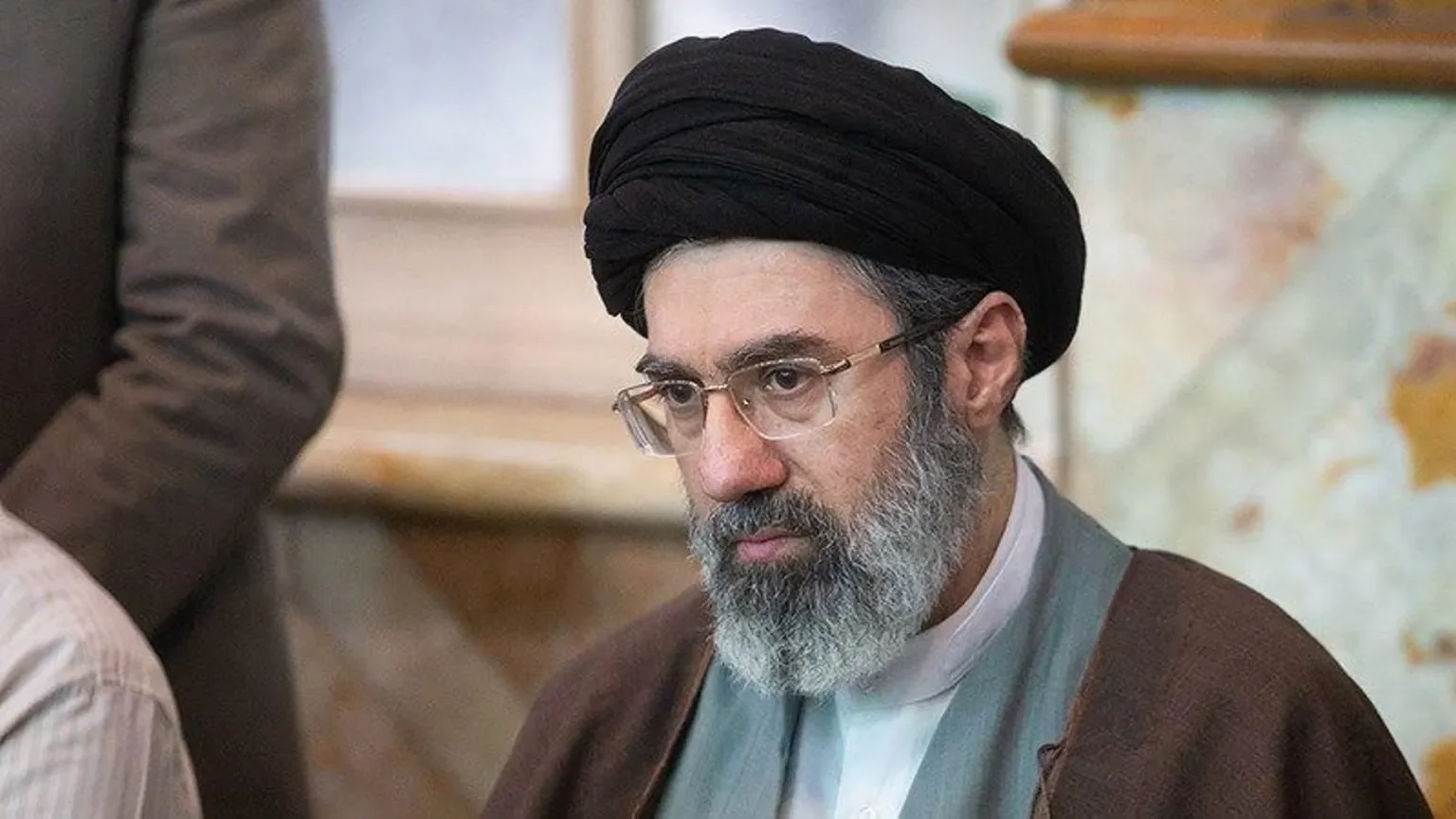
Iran's new Supreme Leader, Mojtaba Khamenei
When Ali Khamenei died in late February 2026 following a U.S.-Israeli airstrike on Tehran, Iran faced an urgent need to name a successor. Within days, the Assembly of Experts moved to fill the vacancy. Mojtaba Khamenei, 56, was selected on March 8 and publicly announced as Supreme Leader shortly afterward, stepping into the role his father had held for nearly four decades.
Mojtaba Khamenei is not a widely known figure outside Iran. He spent most of his career working behind the scenes, which makes his approach as the country’s new leader difficult to predict. Born in 1969, he grew up in Mashhad in northeastern Iran as his father was becoming a key figure in the revolutionary movement that overthrew the monarchy. In the late 1980s he joined the Islamic Revolutionary Guard Corps and served during the final stage of the Iran-Iraq war. Afterward, he pursued theological studies in Qom, the center of Iran’s clerical establishment, where he developed relationships with conservative religious networks.
Over time, Mojtaba took on an increasingly influential role inside his father’s office. For years, he was described as coordinating political and security matters and maintaining close ties with senior IRGC commanders. One notable detail about his clerical standing is that he had long held the mid-level rank of hujjat al-Islam, which sits below the senior clerical title of ayatollah. Ali Khamenei himself was elevated to the rank of ayatollah only after becoming Supreme Leader in 1989, and Mojtaba has now been publicly styled with the same title following his appointment.
His selection drew attention from analysts partly because of a long-standing debate over whether leadership of the Islamic Republic might pass from father to son.Ali Khamenei had previously signaled opposition to the idea of a hereditary transfer of power, and reports in recent years suggested he was reluctant for Mojtaba to automatically succeed him. The Assembly of Experts nevertheless chose him in the midst of a national crisis. Iran was already engaged in open conflict with Israel and facing intense pressure from the United States, circumstances that increased the urgency of a rapid and stable transition. Predictably, the Revolutionary Guard and the armed forces quickly signaled their support for the new leader.
Mojtaba’s political history is that of a loyal insider. Reformist politicians and activists have long accused him of working closely with elements of the Revolutionary Guard to support Mahmoud Ahmadinejad’s presidential campaign in 2005, and similar accusations resurfaced during the disputed 2009 election. His marriage to Zahra Haddad-Adel, the daughter of prominent conservative politician Gholam-Ali Haddad-Adel, further tied him to one of the Islamic Republic’s most influential political families. Zahra Haddad-Adel was reportedly killed in February 2026, in the U.S.–Israeli airstrike that also killed Ali Khamenei.
Mojtaba Khamenei’s rise also reflects the balance of power inside the Islamic Republic at a moment when the security establishment has become increasingly central to the state. Over the past decade, the Islamic Revolutionary Guard Corps has expanded its influence not only in military affairs but also in economic management, regional operations, and domestic security. Mojtaba is widely believed to have cultivated close relationships with senior Guard commanders during his years working inside his father’s office. His appointment therefore suggests continuity in the strategic partnership between the clerical leadership and the security apparatus that has defined Iran’s political system, particularly since the escalation of tensions with Israel and the United States.
At the same time, Iran’s leadership transition is unfolding in a far more volatile regional environment than the one Ali Khamenei inherited in 1989. Tehran is confronting open confrontation with Israel, persistent sanctions pressure from Washington and heightened scrutiny of its nuclear program, while also trying to preserve influence across a network of regional partners in Iraq, Lebanon, Syria and Yemen. For Mojtaba Khamenei, consolidating authority at home will likely be inseparable from managing these external pressures. The immediate challenge for the new Supreme Leader is therefore not only to establish his legitimacy within Iran’s political system, but also to signal whether Tehran intends to escalate confrontation or stabilize a regional order that has become increasingly fragile.
Marianna Calocero is a fourth-year Law student at Bocconi University.
