

The New Resource Race: Critical Minerals
By Krish Yadav | 9th of April, 2026 | 6 min
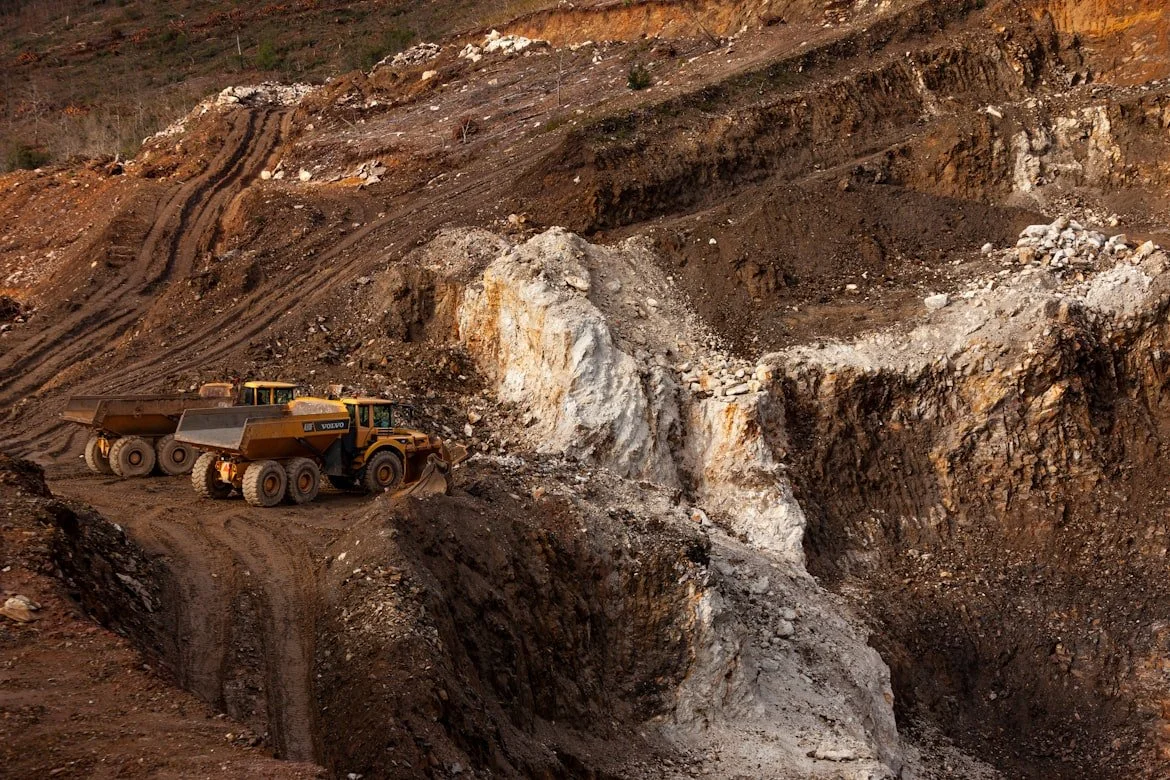
Open-pit mining of critical minerals: where global supply chains begin, and geopolitical competition takes shape.
What if the next global conflict is not fought over land or ideology, but for access to the minerals inside your phone? Critical minerals like lithium, cobalt, nickel, copper, and rare earth elements have established themselves as the key resources of the modern world. They are required for making semiconductor chips, electric vehicles, and clean technologies, to name a few. 21st century development requires critical minerals.
However, critical minerals are not necessarily scarce. Rather, the term “critical” reflects the geographic concentration of their production. This concentration causes supply chain vulnerabilities from geopolitical risks. According to the International Energy Agency, the average market share of the top three refining nations of key energy minerals was 86% in 2024. In fact, for some minerals, 90% of the supply was provided by the top supplier: Indonesia, for nickel, and China for cobalt, graphite, and rare earths.
Nations have, of course, recognized the strategic importance of critical minerals in national security, energy, transportation, and more. However, extraction challenges, high capex, irreplaceability of minerals, and the rapidly growing demand have posed significant challenges to progress. As a result, countries are placing critical minerals at the center of their foreign policy and strategic interventions. In countries like the United States, where critical minerals are one of the few issues with strong bipartisan support, access to critical resources has emerged as a key factor in the country’s diplomatic strategy.
Governments are leveraging bilateral agreements to secure access to critical minerals. Japan and Australia signed a critical mineral partnership in 2022, demonstrating increased cooperation in new strategic areas between allies. In fact the role of critical minerals in bilateral relations is best illustrated by the Ukraine–United States Mineral Resources Agreement signed in 2025. The agreement allowed Ukraine to use its large critical minerals deposits to gain long-term Western commitments for military, financial, and political support in the Russia-Ukraine conflict.
Critical minerals are also fueling multilateral cooperation among nations. The emergence of “Pax Silica,” a U.S.-led initiative launched at the end of 2025, reflects efforts to build trusted supply chains across critical minerals, semiconductors, and advanced technologies. This builds on earlier frameworks such as the Minerals Security Partnership (MSP), a transnational initiative aimed at securing stable access to raw materials. Similarly, the Quad Critical Minerals Initiative, which focuses on similar efforts in the Indo-Pacific. Together, these initiatives illustrate how critical minerals are forming basis of multilateral organizations.
In Europe, the European Union adopted the Critical Raw Materials Act in 2024, setting targets of at least 10% of the EU’s annual consumption for extraction, 40% for processing, and 25% for recycling. These measures position the EU as a regulatory leader in the sector. With standards for sustainability, governance, and due diligence, the EU is setting a benchmark and influencing global rules and norms on how minerals are sourced.
Meanwhile, mineral rich nations are translating increased demand into geopolitical leverage. Mongolia, a landlocked nation between Russia and China, is using its minerals as a pillar of its “Third Neighbor Policy”. By forming joint rare earth mineral committees with South Korea and research collaborations with the UK it is unlocking new opportunities for growth. In Latin America, Chile has shifted toward state-controlled, partnership-based diplomacy. This policy requires state participation in lithium projects with public–private partnerships and long-term strategic control. In 2022, the Zimbabwean government introduced a ban on the export of unprocessed lithium ore. It requires foreign actors to invest in local processing and refining to attract foreign direct investment.
However, this progress has also created new complexities for governments, civil society organisations focused on human rights and climate action. Data from Institute of Development Studies (IDS) indicated 36,000 mining-related conflict events across 4,293 locations worldwide between 2015 and 2022, highlighting violence at grass root level. Labour abuses remain prevalent, particularly in cobalt mining in the Democratic Republic of the Congo, where child and forced labour continue to be reported. Meanwhile, researchers from Queensland University have estimated that globally, 54 percent of critical mineral mining projects are located on Indigenous Peoples’ lands, raising concerns over land rights and displacement. Poisoning of fresh and seawater and deforestation continue to pose serious environmental challenges, accelerating. Together, these challenges highlight the social and environmental costs associated with the growing demand for critical minerals.
In a more disjointed global system, critical minerals are situated at the nexus of cooperation and competition. Their concentration and strategic importance run the risk of escalating geopolitical rivalries and altering patterns of dependency among states, even as they are fostering new kinds of collaboration and coordination. In a system where power is increasingly linked to control over supply chains, the problem is striking a balance between resource security, sustainability, and equity. In the coming decades, how these dynamics are handled will ultimately determine whether essential minerals serve as a basis for cooperation or as a trigger for conflict.
Krish Yadav is a 1st-year International Economics and Management student.
